Introduction to Climbing Egypt’s Highest Peaks
When most travelers envision the landscape of Egypt, their minds immediately drift toward the golden dunes of the Sahara or the architectural marvels of the Giza Plateau. However, for those seeking a different kind of transcendence, the rugged, jagged interior of the Sinai Peninsula offers a vertical challenge unlike any other in the Middle East. Climbing Egypt’s highest peaks is not merely an athletic pursuit; it is a journey through layers of ancient history, crystalline geology, and profound spiritual heritage. At HOLIDAY TOURS, we believe that the true essence of Egypt is found both in its valley floors and atop its granite summits.
The Distinction between Mount Saint Catherine and Mount Sinai
It is a common misconception among casual tourists to conflate Mount Sinai with Mount Saint Catherine, yet they offer vastly different experiences. Mount Sinai, known locally as Jebel Musa (the Mountain of Moses), stands at 2,285 meters. While it is the most famous peak due to its religious significance, it is not actually the highest point in Egypt. That title belongs to Mount Saint Catherine (Jebel Katherina), which looms nearby at a staggering 2,629 meters above sea level. While Mount Sinai is often crowded with pilgrims seeking the sunrise, Mount Saint Catherine offers a more secluded, physically demanding guided adventure for seasoned hikers. Understanding this distinction is the first step in planning a comprehensive Sinai trekking expedition that balances spiritual reflection with high-altitude exploration.
Historical and Spiritual Significance of the Sinai Peninsula
The Sinai Peninsula serves as a land bridge between Africa and Asia, a crossroads of civilizations for millennia. For the Abrahamic faiths, this is hallowed ground. It is the site where the Israelites are said to have wandered and where Moses received the Ten Commandments. Beyond the biblical narrative, the region has been a sanctuary for Christian monastics since the 4th century. The granite massifs are dotted with ancient hermitages, hidden springs, and stone-carved pathways that have been trodden by monks and Bedouins for centuries. When you trek these mountains with HOLIDAY TOURS, you are not just walking on rock; you are following a trail of human faith and endurance that has remained largely unchanged for nearly two thousand years.
 The Trek to Mount Saint Catherine (Jebel Katherina)
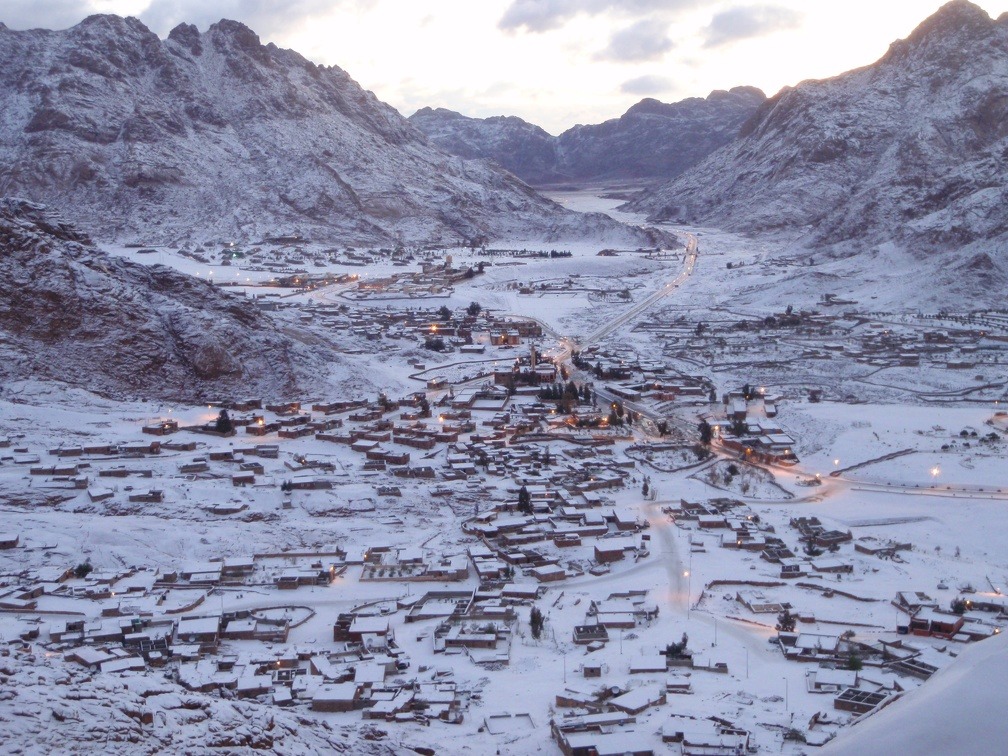 The Trek to Mount Saint Catherine (Jebel Katherina)
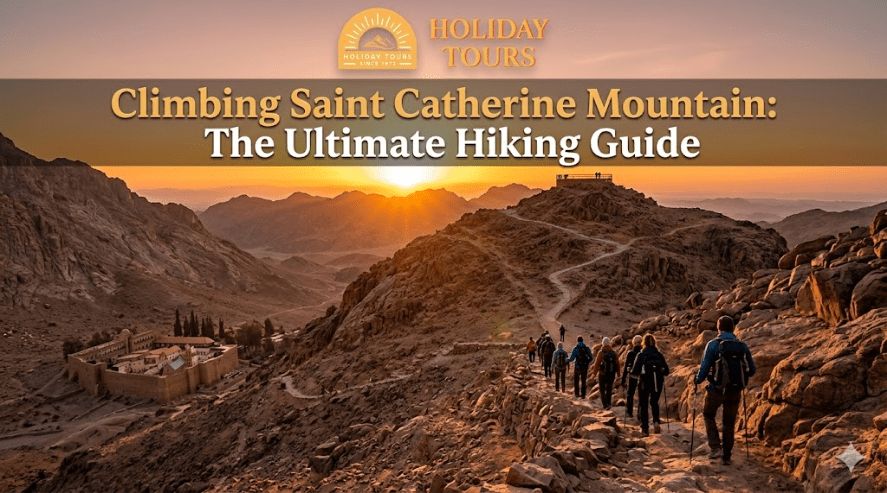
Reaching the rooftop of Egypt is a feat that requires preparation, stamina, and a deep appreciation for the desert’s raw beauty. Mount Saint Catherine is a massive granite dome that provides a 360-degree view of the entire peninsula. The trail is characterized by its rocky terrain and the silent, thin air that characterizes high-altitude desert environments. Unlike the more commercialized paths of Mount Sinai, Jebel Katherina remains a bastion of wilderness.
Route Overview: Reaching the 2,629m Summit
The journey typically begins from the village of Saint Catherine. The trek usually takes between five to seven hours depending on the group’s pace. The trail winds through Wadi El-Arbaein, passing the “Rock of Moses” and several ancient orchards maintained by the local Jebeliya Bedouin. As the incline sharpens, the path becomes more technical, leading hikers through narrow ridges and over massive boulders. The final ascent involves a series of steep stone steps leading to a small chapel dedicated to Saint Catherine at the very summit. From this vantage point, on a clear day, the geological drama of the Sinai is laid bare, showcasing the transition from volcanic rock to the deep blues of the surrounding seas.
Physical Requirements and Trail Difficulty
While you do not need to be a professional athlete to summit Mount Saint Catherine, a baseline level of cardiovascular fitness is essential. The trail is rated as moderate to difficult due to the elevation gain and the uneven, rocky surface. The descent can be particularly taxing on the knees, making trekking poles a highly recommended accessory. For those who want to experience the thrill of the heights but are looking for more technical challenges, HOLIDAY TOURS often suggests incorporating specialized mountain climbing sessions in nearby wadis to complement the hiking experience.
The Views from the Top: Gulf of Aqaba and Gulf of Suez
The reward for the arduous climb is unparalleled. To the east, the Gulf of Aqaba glistens, with the mountains of Saudi Arabia visible on the horizon. To the west, the Gulf of Suez stretches toward the African mainland. Looking southward, you can see the jagged peaks of the High Sinai Mountains, a sea of red and grey stone that looks like a frozen ocean. The sense of isolation at the summit is profound, offering a silence that is rarely found in the bustling cities of Cairo or Luxor.
 The Iconic Mount Sinai Sunrise Hike
 The Iconic Mount Sinai Sunrise Hike
While Saint Catherine offers the height, Mount Sinai offers the atmosphere. The sunrise hike up Jebel Musa is a rite of passage for many travelers in Egypt. It is an experience that combines physical exertion with a collective sense of awe as the sun breaks over the horizon, illuminating the “God-trodden” mountains.
Why Hikers Start at Midnight: The Sunrise Experience
The tradition of starting the hike at approximately 1:00 AM or 2:00 AM serves two purposes. Firstly, it allows hikers to avoid the scorching daytime heat of the desert. Secondly, it ensures that participants reach the summit in time to witness the dawn. Watching the sky transition from a star-studded black velvet to hues of indigo, orange, and gold is a transformative experience. HOLIDAY TOURS ensures that our guests are positioned at the best viewpoints well before the first light hits the peak of the chapel and the mosque that share the summit.
Choosing Your Path: The Camel Trail vs. The Steps of Penitence
There are two primary ways to reach the summit of Mount Sinai, each offering a different perspective of the mountain. The Siket El Bashait (The Camel Trail) is a wide, winding path that allows for a steady, gradual incline. It is the preferred route for the ascent in the dark, and for those who find the climb too taxing, Bedouin-led camels are available for hire along this route. Alternatively, the Siket Sayidna Musa (The Steps of Penitence) consists of 3,750 stone steps carved by a monk as an act of devotion. This route is steeper and more direct, offering breathtaking views but requiring significantly more leg strength. Many hikers choose to go up the Camel Trail and descend via the Steps of Penitence to experience the best of both worlds.
The Role of Local Bedouin Guides like Sabaan
No trek in the Sinai is complete without the expertise of the Jebeliya Bedouin. These “People of the Mountain” have lived in the shadow of the peaks for centuries. Guides like the legendary Sabaan and his kinsmen possess an intuitive knowledge of the weather, the shortcuts, and the stories of the land. Their presence is not only a safety requirement but a cultural bridge. They prepare sweet Bedouin tea over small brush fires and share tales of the mountains that you won’t find in any guidebook. HOLIDAY TOURS works exclusively with these local experts to ensure an authentic and safe experience for every traveler.
Planning Your Sinai Hiking Tour
Organizing a trip to the Sinai high country requires more logistical foresight than a standard beach holiday. The environment is beautiful but can be unforgiving if you are unprepared. For those seeking a seamless transition from the heights of the mountains to the depths of the river valley, HOLIDAY TOURS can help coordinate a journey that includes both the rugged Sinai and a luxury travel experience on the Nile.
Best Time of Year for Trekking in Egypt
Timing is everything in the desert. The ideal months for trekking are from October to November and March to April. During these shoulder seasons, the daytime temperatures are mild, and the nights are chilly but manageable. Winter (December to February) can be surprisingly harsh; snow is not uncommon on Mount Saint Catherine, and temperatures on the summit of Mount Sinai frequently drop below freezing. Summer (June to August) is generally too hot for strenuous hiking, with midday temperatures often exceeding 40°C (104°F), making the physical exertion dangerous.
How to Book a Sinai Egypt Safari or Trek
Booking through a reputable agency is crucial for navigating the various permits and security checkpoints required to enter the Saint Catherine Protectorate. When looking for professional guidance, ensure the operator provides certified Bedouin guides and handles all the necessary transportation. HOLIDAY TOURS offers comprehensive packages that include transfers, guiding fees, and even equipment rental if needed, allowing you to focus entirely on the climb.
Logistics from Dahab and Sharm El Sheikh
Most travelers approach the mountains from the coastal resorts of Dahab or Sharm El Sheikh. Dahab is the closer of the two, roughly a two-hour drive from the monastery. Sharm El Sheikh is about three hours away. Most tours involve a late-night pickup (around 10:00 PM or 11:00 PM) to reach the trailhead by midnight. It is a long night, but the convenience of private transport provided by HOLIDAY TOURS makes the recovery much easier the following day.
 Essential Packing List for High-Altitude Desert Hiking
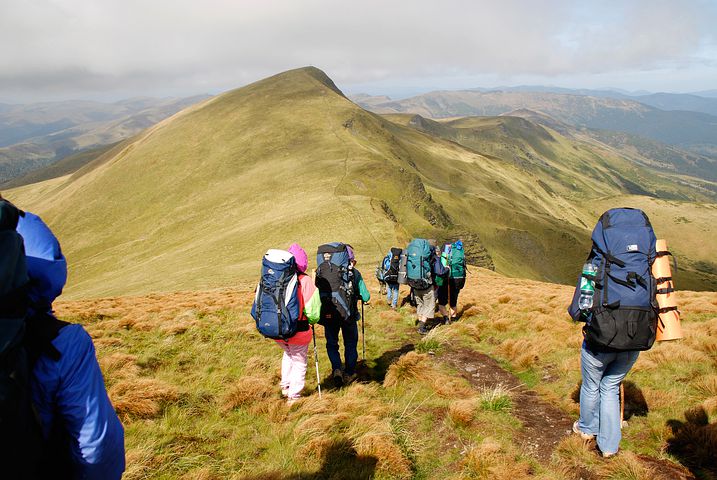 Essential Packing List for High-Altitude Desert Hiking
The primary challenge of packing for the Sinai is the extreme temperature fluctuation. You may start your hike in a t-shirt and end it wrapped in a heavy parka. Being prepared with the right gear is the difference between a memorable adventure and a miserable night.
Layering for Extreme Temperature Shifts
The “three-layer” rule is vital. Start with a moisture-wicking base layer to keep sweat off your skin. Add an insulating middle layer, such as a fleece or down jacket, to trap body heat. Finally, a windproof and waterproof outer shell is necessary to protect against the biting winds at the summit. Don’t forget a warm hat and gloves; your extremities will be the first to feel the cold while waiting for the sunrise.
Footwear and Gear for Rocky Terrain
Sturdy, broken-in hiking boots with good ankle support are non-negotiable. The trails are composed of loose scree and jagged granite. A headlamp with extra batteries is essential for the night climb, as it keeps your hands free for balance. At HOLIDAY TOURS, we always remind our guests that a simple flashlight is often insufficient when navigating the steep Steps of Penitence in the dark.
Supplies for Hydration and Nutrition
- Water: At least 3 liters of water per person. The dry desert air dehydrates you faster than you realize.
- High-Energy Snacks: Trail mix, dates, chocolate, and protein bars provide quick energy for the final ascent.
- Electrolytes: Adding electrolyte powder to your water helps maintain mineral balance during the strenuous climb.
Exploring Saint Catherine’s Monastery
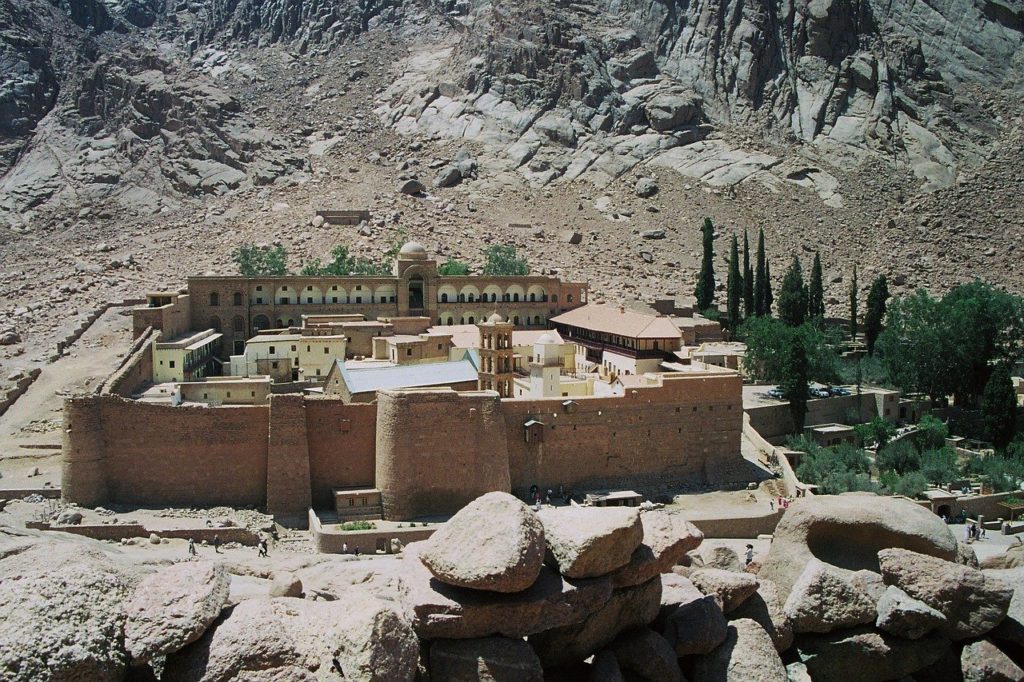
At the foot of the mountains lies the Sacred Monastery of the God-Trodden Mount Sinai, more commonly known as Saint Catherine’s Monastery. This UNESCO World Heritage site is one of the oldest working Christian monasteries in the world and serves as the gateway to the peaks.
UNESCO World Heritage Site Highlights
Built between 548 and 565 AD by order of Emperor Justinian, the monastery is a fortress of faith. Its massive granite walls have protected its treasures for over 1,400 years. Inside, the Church of the Transfiguration houses incredible mosaics and ancient icons that have survived the iconoclastic periods of history.
The Burning Bush and the Library
For many, the primary draw is the Burning Bush, a rare species of bramble (Rubus sanctus) that tradition identifies as the site where God first spoke to Moses. Nearby, the monastery’s library holds the second-largest collection of early codices and manuscripts in the world, surpassed only by the Vatican. While access to the library is restricted to scholars, some of its treasures are displayed in the monastery museum.
Visitor Etiquette and Opening Hours
The monastery is a place of active worship and monastic life. Visitors are expected to dress modestly (shoulders and knees covered). It is generally open to the public from 9:00 AM to 11:30 AM, except on Fridays, Sundays, and Orthodox Greek religious holidays. Timing your descent from the mountain to coincide with the opening hours is a strategy HOLIDAY TOURS meticulously plans for our guests.
Safety and Sustainable Tourism in Sinai
The Sinai is a sensitive environment, both ecologically and socially. Responsible trekking ensures that these majestic mountains remain preserved for future generations.
Navigating the Desert with Experienced Guides
The desert can be deceptive. Trails that look clear in the moonlight can lead to dangerous drop-offs. Never attempt to trek the Sinai mountains without a local guide. Not only is it a legal requirement in the protectorate, but it is also the only way to ensure safety. The guides are trained to handle emergencies and know the terrain better than any GPS device.
Supporting the Local Bedouin Community
By choosing a tour that employs local Bedouin guides and uses their services (like camel transport or mountain lodges), you are directly contributing to the local economy. The Jebeliya tribe depends on sustainable tourism to maintain their traditional way of life. HOLIDAY TOURS is committed to ethical tourism practices that empower local communities while providing world-class service to our clients.
Health Tips for High-Altitude Trekking
Altitude sickness is rare at 2,600 meters but can affect some individuals. Symptoms include headaches, nausea, and dizziness. The best prevention is to ascend slowly and stay hydrated. If you feel unwell, inform your guide immediately. It is also important to protect yourself from the intense sun during the descent; even if the air feels cool, the UV rays at high altitude are powerful.
In conclusion, the journey to the top of Egypt is an experience that lingers in the soul long after the dust has been washed from your boots. Whether you are seeking the physical challenge of Jebel Katherina or the spiritual dawn of Jebel Musa, these peaks offer a perspective on Egypt that most visitors never see. With HOLIDAY TOURS as your partner, you can navigate these ancient paths with confidence, safety, and a deep connection to the history of the land.
Frequently Asked Questions about Sinai Hiking
1. How difficult is the hike up Mount Sinai compared to Mount Saint Catherine?
Mount Sinai is considered a moderate hike, accessible to most people with average fitness, especially if taking the Camel Trail. Mount Saint Catherine is more demanding, involving a longer distance, steeper inclines, and more technical rocky paths. It is recommended for those with prior hiking experience.
2. Do I need a permit to climb these mountains?
Yes, the area is part of a protected national park and security zone. You must be accompanied by a registered Bedouin guide, and your tour operator will typically handle all the necessary permits and police registrations required for the trek.
3. What should I wear for the midnight hike?
Layering is essential. Wear a base layer that wicks sweat, a warm fleece or sweater, and a windproof jacket. Even in summer, the summit can be very cold before sunrise. Sturdy hiking shoes or boots are required to protect your feet from the sharp granite rocks.
4. Is it safe to trek in the Sinai Peninsula?
Trekking in the Saint Catherine area is generally very safe when done through established travel agencies and with local Bedouin guides. These guides have an intimate knowledge of the area and work closely with local authorities to ensure the safety of all hikers.
5. Can children participate in the Mount Sinai sunrise hike?
Older children (usually 10 and up) who are active and used to walking can typically manage the Mount Sinai hike, especially if they use a camel for the ascent. However, the midnight start and the cold temperatures can be challenging for younger children.