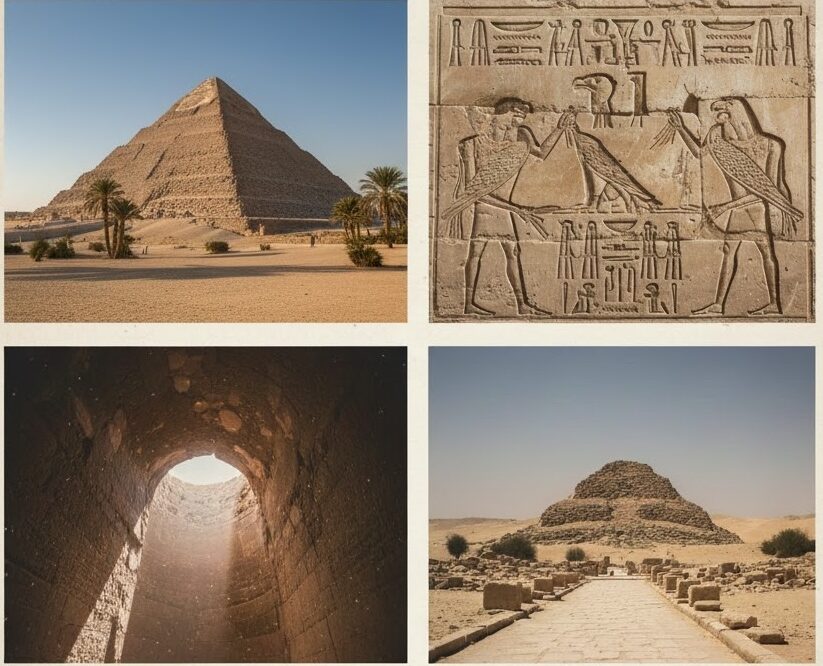
Saqqara is one of Egypt’s most significant archaeological treasures and the site of the Step Pyramid of Djoser, the oldest stone pyramid ever built. Located just south of Cairo, the Saqqara pyramid complex marks a turning point in ancient Egyptian architecture.
Visiting Saqqara offers a fascinating journey into the origins of pyramid construction, royal tombs, and early religious beliefs. From its revolutionary design to its underground chambers and surrounding monuments, Saqqara reveals how ancient Egyptians shaped the foundations of monumental architecture.
In this guide, you’ll discover everything you need to know about the Saqqara Pyramid, including its history, architectural design, key attractions within the complex, and essential tips to help you plan a memorable visit.
Where Is the Saqqara Pyramid Located?
The Saqqara Pyramid is located about 30 kilometers south of Cairo, near the ancient capital of Memphis. It forms part of the huge Saqqara necropolis, which served as a burial ground for ancient Egyptian royalty and officials for thousands of years.
Its convenient location makes Saqqara an ideal day trip from Cairo.
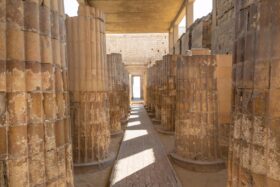
History of the Saqqara Pyramid
The Step Pyramid of Djoser was built during the Third Dynasty around 2700 BCE for Pharaoh Djoser.
It was designed by Imhotep, one of the most brilliant architects in ancient history. Unlike later smooth-sided pyramids, this pyramid was constructed in six stepped layers, marking a major breakthrough in monumental stone architecture
Why the Step Pyramid Is So Important
The Saqqara Pyramid is considered a turning point in Egyptian history because:
- It is the oldest stone pyramid in Egypt
- It introduced large-scale limestone construction
- It inspired all later pyramids, including those in Giza
- It represents the transition from mastaba tombs to pyramids
This makes Saqqara one of the most historically significant sites in the world.
Inside the Saqqara Pyramid Complex :
The Step Pyramid of Djoser
The central monument, rising in six tiers, dominates the site and symbolizes the pharaoh’s ascent to the heavens.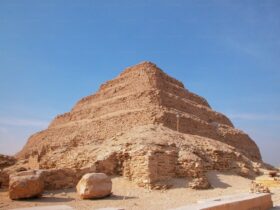
The Heb-Sed Courtyard
Used for royal renewal ceremonies, this area reflects ancient beliefs in rebirth and eternal kingship.
The South Tomb
A symbolic tomb containing detailed reliefs and carvings connected to the king’s afterlife journey.
What Can You See Inside the Step Pyramid?
The pyramid contains an underground network of tunnels and chambers, originally designed to protect the king’s burial.
Although the burial chamber is not always open to visitors, restored areas allow guests to explore parts of the interior and experience the engineering brilliance of ancient Egypt
Best Time to Visit Saqqara Pyramid
The best time to visit the Saqqara Pyramid is from October to April, when temperatures are cooler and ideal for walking.
Early morning visits are recommended to avoid crowds and enjoy better lighting for photography
Saqqara Pyramid Visiting Tips
- Wear comfortable walking shoes
- Bring sun protection and water
- Allocate at least 2–3 hours to explore the complex
- Combine Saqqara with Memphis or Dahshur for a full historical tour
- Visiting with a knowledgeable guide enhances the experience
Is Saqqara Pyramid Worth Visiting?
Absolutely , Saqqara offers a quieter, more immersive experience than Giza while providing deeper historical insight. Seeing the world’s first pyramid in its original setting is an unforgettable experience for history lovers, families, and cultural travelers.
Frequently Asked Questions About Saqqara Pyramid
How old is the Saqqara Pyramid?
The Step Pyramid of Djoser is over 4,700 years old.
Can you go inside the Saqqara Pyramid?
Yes, parts of the pyramid are open depending on restoration schedules.
How long does a visit take?
Most visitors spend 2 to 3 hours exploring the site