
Shali Fortress Siwa: Every Town Has an Old Town. But This One?
Whenever I think of Shali Fortress Siwa, I think of a town built from its own landscape. Every town has an old town. But this one? When you enter a city, sooner or later somebody points to the old quarter. Cairo has its old streets; cities everywhere have that part where the buildings seem to belong to another century. So I was prepared for an old town in Siwa. What I wasn’t prepared for was the way it was built. The ruins of Shali stand right in the middle of the place.
You cannot treat them as a little decorative monument tucked away on the edge of town. This was the town. Imagine that for a moment. The thing you now visit as a historic site was once the place where people lived, went about their day, and returned home at night. I love that shift in perspective.
The ruins stop being a pile of walls and become the outline of somebody’s ordinary life.
What on earth is Kershef?
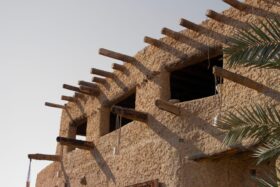 Now, the material. The locals call it Kershef. You may see the name spelled in different ways in English, but the idea is the same: an earth-and-salt building mixture associated with Siwa. We Egyptians have built with mud for a very long time. Nothing shocking about that.
But here you have salt, abundant in the oasis, mixed into the building tradition. And the result has a very particular look. Ordinary mud walls can look, well, muddy. Kershef has texture, irregularity, and a sort of rugged beauty. I remember looking at those surfaces and thinking how attractive they were.
They are not smooth, anonymous walls. They look as if they belong to the landscape. I do not pretend to know every ingredient or every proportion used by the builders. That is the craft of the people who made it. What interested me was that the building material was inseparable from the place itself.
The oasis was not merely the setting for the town. In a sense, the oasis supplied the town’s walls.
And they built upwards!
The roofs were another surprise. Palm trunks were used as structural supports, sometimes split or arranged to span the rooms. Think about what that means. You have walls made from this local mixture and roofs carried by pieces of palm tree. And the old builders did not necessarily stop at one floor.
From what I learned and saw, parts of the settlement rose several levels. Several! When I first heard that, I tried to picture the construction sequence. Finish the walls, lay the trunks, make the roof, then go up and build again. People walking overhead.
Families living above families. Was it reliable by modern engineering standards? I cannot tell you. I was not there when they built it, and I would never claim to have inspected its structure. But as a visitor, I found the ambition astonishing.
This was a compact community finding ways to grow within its boundaries using what was available locally.
A fortress in the middle of the desert
Step back and look at Shali Fortress Siwa as a whole. It is not a single picturesque house. It is a dense collection of homes and passageways, with the feeling of a defended settlement. In my imagination, I see people leaving the enclosed town to work the surrounding land and returning to safety in the evening. That is what a fortified community does: it creates an inside and an outside.
The streets were narrow; the houses stood close together. Everything was concentrated. When you walk through the remains now, you have to do a little mental work. Put the roofs back in place. Put people in the doorways.
Imagine voices from one level to the next. Suddenly the ruins feel less silent. They become a town again, at least for a minute.
When rain changed the town
Local accounts describe a period of exceptionally heavy rain that damaged the old settlement. It makes sense that walls built from earth and salt would be vulnerable to prolonged water exposure. In the recording I found myself trying to calculate how long ago it happened. More than a century? Perhaps closer to a century and a half?
I had been hearing the story for decades, and the numbers kept moving in my head. So I prefer not to give you an exact year from memory. What matters in the story is the change. After the damage, living inside the tightly packed old town became difficult. People gradually built outside it.
The settlement spread, and Shali became a remnant in the center of a newer town. The old center did not disappear completely. It stayed there, a reminder of how people had once organized their lives around protection, local materials and a very different relationship with the desert.
Wait until you see it at night
And then there is the lighting. I have seen Shali in daylight, and I have seen it illuminated after dark. I have a soft spot for the night view of Shali Fortress Siwa. The forms rise out of the shadows, and the whole complex seems larger and more dramatic. It is the same place, of course, but it tells a different story.
I remember wanting our guests to see that view early in their visit. After a long road journey, the old walls could deliver exactly the kind of welcome we had hoped for: not a loud attraction, not a grand announcement, just the sight of a town that has outlived its original purpose. If you have ever wondered why I keep talking about the time of arrival, that is why. In Siwa, the light can be part of the story. Next, I’ll tell you what we did after the drive: the small hotel, the names on the doors, and the walk that made everybody forget how long they’d been sitting in the vehicle.
Explore Siwa with Holiday Tours
These are memories from an earlier style of journey, not a promise of the itinerary currently on sale. If Siwa has caught your imagination, explore our Siwa Oasis tour package and its current program
003 — Our First Night in Siwa