
Let’s be honest. You landed in Cairo with a full week ahead of you, opened Google, typed ‘things to do in Cairo,’ and immediately got hit by the same fifteen tired suggestions: Giza pyramids, Khan el-Khalili, the Egyptian Museum. Done and done. Except — what do you do on day three?
This is the exact problem most travelers face in Cairo. It’s not that the city is boring. It’s actually the opposite. Cairo is almost overwhelmingly alive. The issue is that most Cairo tour packages are still operating like it’s 2005, recycling the same itinerary that was designed for someone with three days and zero curiosity.
This guide is for the traveler who wants more. The one who’s already booked the Giza pyramids but is staring at four free mornings wondering what happens after. We’re going to talk about Cairo sightseeing that actually feels like discovery — the new Nile walk, the Saturday flea market, sunrise at Islamic Cairo, a morning coffee in Maadi, the new Grand Egyptian Museum experience, and yes, the other pyramids nobody bothers visiting.
And because we want you to actually find the right people to help you do this — let’s also talk about how to pick a Cairo tours operator that isn’t just going to drive you to the same souvenir shop twice.
First Things First: What Kind of Traveler Are You in Cairo?
Before you even look at Cairo tour packages, be honest with yourself about what kind of trip you want. Because Cairo can go in very different directions depending on your answer.
Are you someone who wants to understand the history? Someone who needs a local voice to make the details make sense? Go for guided tours — specifically Islamic Cairo tours that take you into the backstreets, not just the famous mosques. Are you more of a wander-and-discover type? Then you need a mix: a guide for the complex sites, and free mornings to roam on your own. Are you traveling with family? Toddlers do not love hour-long mosque explanations. Focus on the GEM, garden walks, and rooftop dinners.
Once you know your travel style, you’ll be able to filter out about 70% of the Cairo tours on the market that just aren’t built for you.
Cairo Walks Nobody Is Telling You About (But Should Be)
Here’s what the brochures skip: Cairo has become genuinely walkable in ways it wasn’t five years ago. Not the whole city — this is still a 20-million-person metropolis — but pockets of it are now stunning on foot. Let’s go through them.
The New Nile Walk at Zamalek
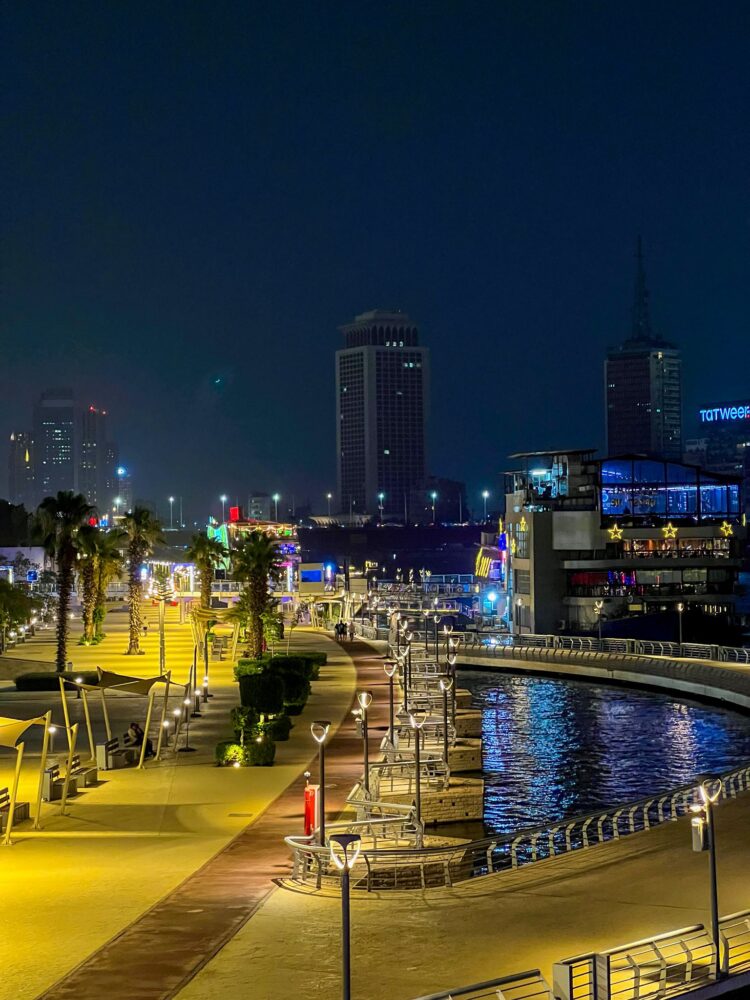
This is the one everyone in Cairo is talking about right now. A continuous waterfront promenade stretching for several kilometers along the Nile in Zamalek, the island neighborhood in the middle of the city. It opened recently and it’s already completely changed how locals use that stretch of the riverbank.
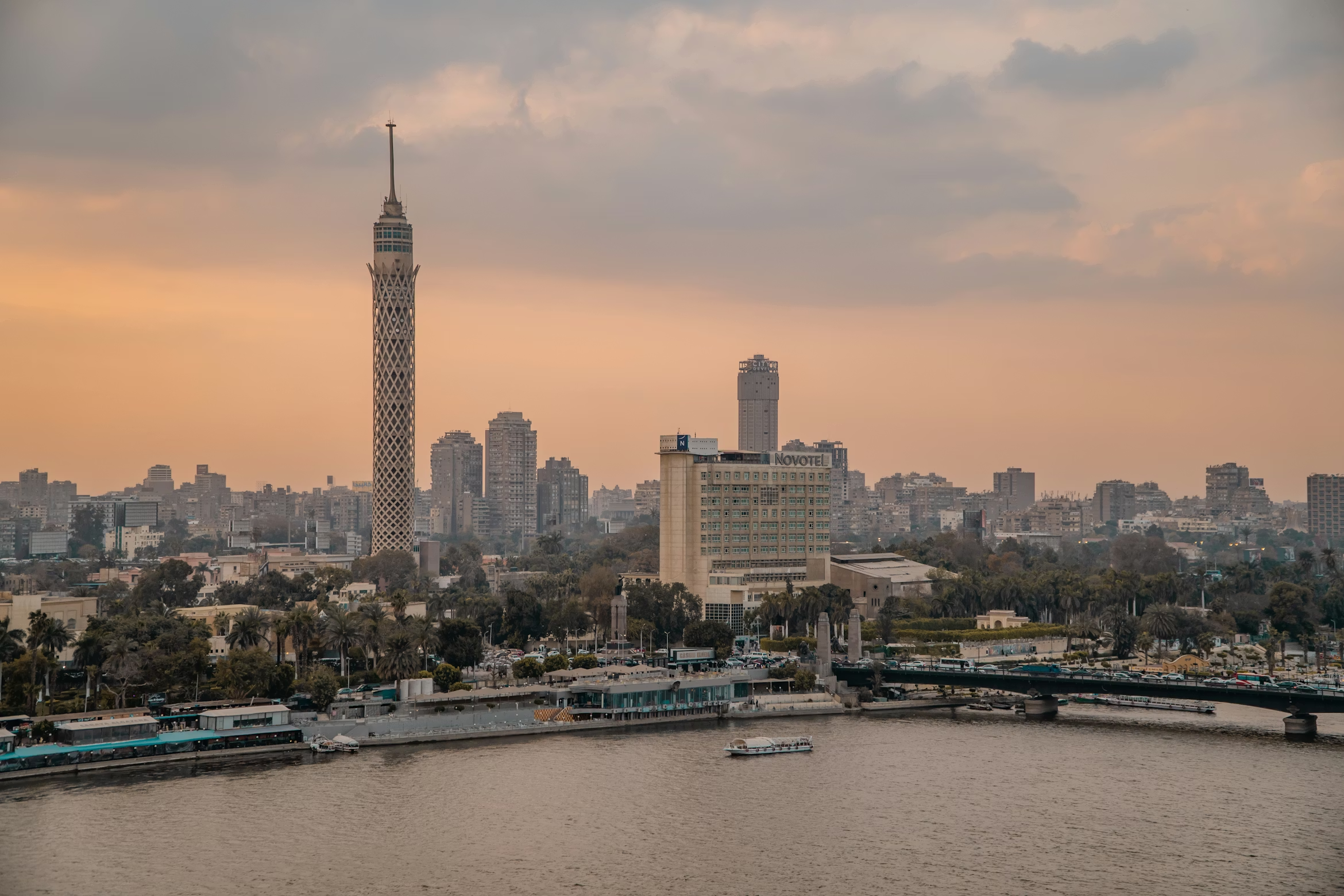
Come in the late afternoon when the light goes gold. You’ll find couples, joggers, families with kids, people setting up picnics on the grass. There are cafes and small kiosks opening along the route. The views across to the west bank are actually lovely — you can see Cairo Tower, the feluccas on the water, the old buildings on the Corniche. This is a Cairo walk that feels genuinely calm, which is not something Cairo offers often.
If you’re staying in Zamalek or Garden City, this is your default evening outing. No tour guide needed. Just walk north from the Zamalek bridge toward the 26th of July corridor and let the city slow down around you.
Downtown Cairo Morning Walk: Cinemas, Cafes, and Forgotten Architecture
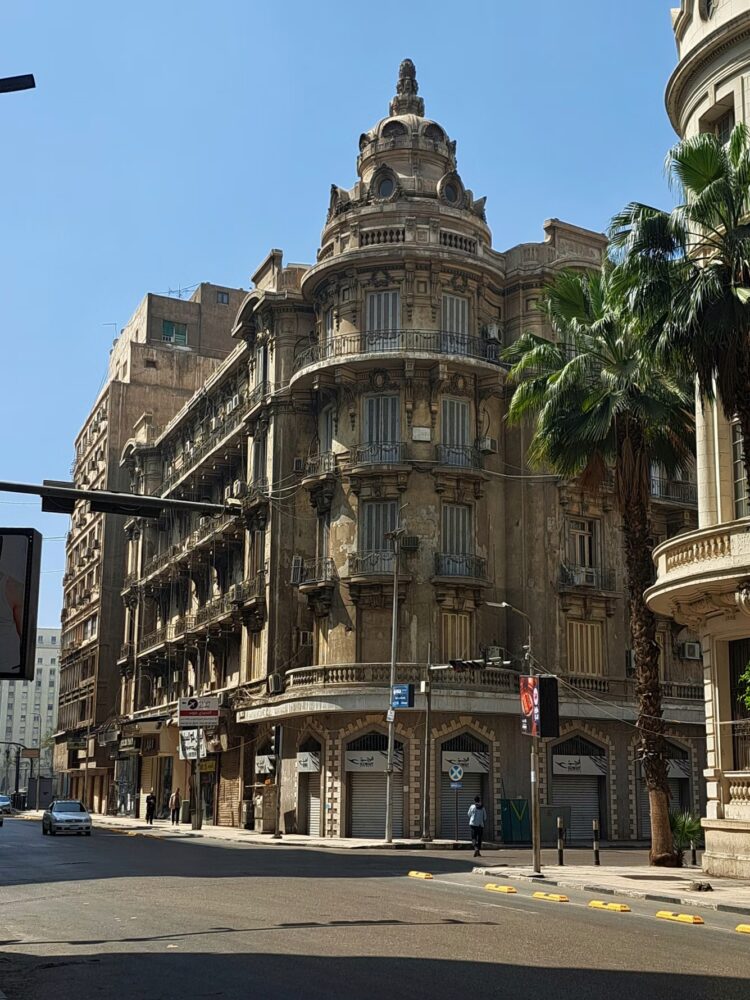
Downtown Cairo — Wust el-Balad — is one of the most underrated morning destinations in the whole city. Before the crowds arrive, before the traffic gets truly unhinged, downtown is almost peaceful. The streets that run between Talaat Harb Square and Tahrir Square are lined with art deco buildings from the 1920s and 30s, most of them still standing with their original facades.
The old cinemas are the real treasure. Cairo Cine, Radio Cinema, Miami — some are still operating, some are closed, all are photogenic. You can have breakfast at one of the old-school cafes on Talaat Harb Street that haven’t changed their furniture since 1978. Order a ful and eggs plate, drink Turkish coffee, and watch downtown wake up.
This is not an organized tour experience. This is an unstructured morning that rewards the curious. Bring a camera. Get lost. Cairo downtown is full of staircases that lead to rooftops, hidden courtyards, and bookshops that have been in business since your grandparents were young.
The Saturday Vintage Flea Market in Downtown
Every Saturday, a flea market appears in downtown Cairo — and it’s the kind of thing that makes you feel like you accidentally walked into a film set. We’re talking vintage cameras, old Arabic vinyl records, Soviet-era binoculars, dusty film posters, handwritten letters, ’70s jewelry, antique lamps, and things you cannot identify but absolutely need.
It draws a real mix of people: collectors, students, tourists who stumbled upon it, sellers who have been coming for twenty years. Prices are negotiable. Some sellers speak English. The whole thing runs until early afternoon, and there are always street food vendors nearby.
This is the kind of Cairo sightseeing that doesn’t appear on any official tour list, which is exactly what makes it worth going to. Combine it with the downtown morning walk and you’ve got a full Saturday that costs almost nothing.
Bab el-Wazir and the Recently Renovated Mosques
This is serious. The area around Bab el-Wazir — which runs between the Citadel and the edge of Islamic Cairo — has seen a wave of restoration in recent years, and several mosques that were barely accessible a decade ago are now fully renovated and genuinely beautiful.
Mosque of Aqsunqur (also called the Blue Mosque) is the one most people mention, with its stunning Ottoman blue tilework. But beyond that, the streets themselves are the attraction. Narrow, slightly crumbling, full of craft workshops and kids playing and cats doing whatever cats do. This is living history in a way that no museum can replicate.
The renovated mosques have added proper lighting and some have small exhibitions inside. Entry tickets are very reasonable — usually 60 to 150 Egyptian pounds for foreigners, though these prices change, so check the current rate with your tour operator or at the gate. Include this as part of any Islamic Cairo tours itinerary. It’s not optional.
Walk in Maadi: Asian Food, Bakeries, and Tree-Lined Streets
Maadi is Cairo’s expat neighborhood, and it genuinely feels like a different city. Wide tree-lined streets, actual sidewalks, dogs being walked on leashes — all very un-Cairo in the best possible way. But what’s developed in Maadi over the last few years is a legitimate food scene that’s worth crossing the city for.
The Road 9 area is where you want to be. There are excellent Japanese restaurants, Korean BBQ places, authentic Vietnamese spots, Thai food, and a handful of Filipino bakeries that have become genuinely beloved by residents. There are also coffee roasters, bookshop-cafes, and small galleries that wouldn’t be out of place in any European city.
A Maadi afternoon walk followed by dinner is a complete experience. Start around 5pm, walk from Road 9 toward Road 233, stop for coffee, browse whatever’s there, and end the evening at one of the Asian restaurants. No tour guide required. Just comfortable shoes and an appetite.
The Pyramids Area Has More Than You Think
Yes, you’re going to Giza. Everyone goes to Giza. But the pyramids area has evolved significantly in the last few years and most people are still visiting it like it’s 1995.
The Grand Egyptian Museum (GEM)
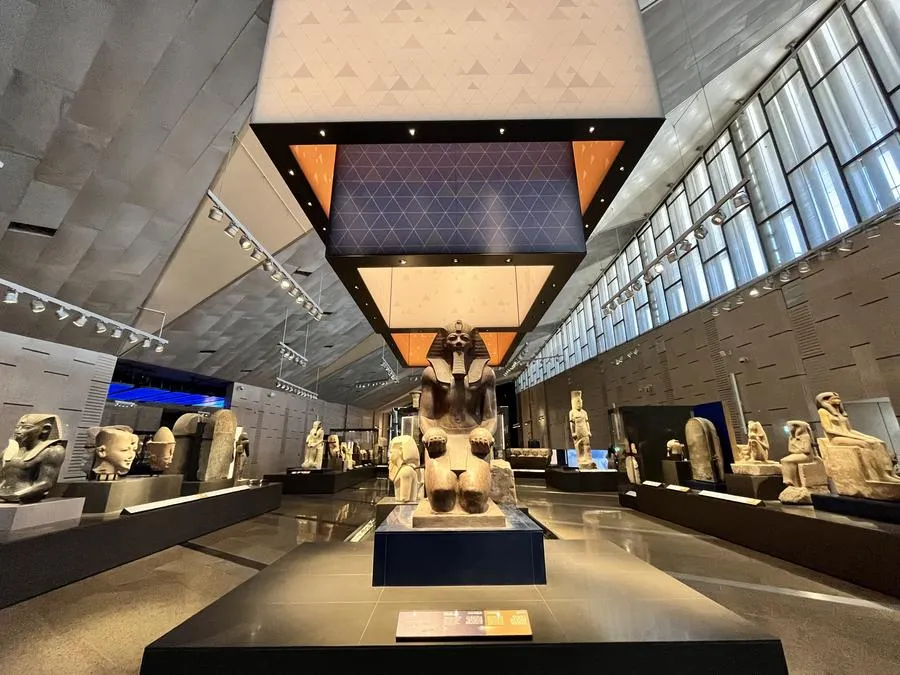
The Grand Egyptian Museum — GEM — is now open and it’s not like any museum you’ve been to in Egypt before. The scale is genuinely difficult to describe. The building was designed to be visible from the pyramids themselves, and standing in the grand atrium with the Great Gallery of Ramesses II — a row of statues stretching up multiple floors — is one of those actual jaw-drop moments that travel rarely delivers.
The Tutankhamun collection here is the most complete it has ever been displayed. More than 5,000 objects from the tomb, many of which have never been publicly shown before. The display design is serious museum-level work — lighting, sequencing, explanatory panels that are actually interesting to read.
Book tickets in advance. The GEM gets busy, particularly on weekends and holidays. A guided tour specifically designed for the GEM is worth the money because the space is enormous and without context, even the most extraordinary objects can start to blur together.
A good starting point for booking a guided GEM experience is Holiday Tours Egypt, one of the established Cairo tour operators that has adapted their itineraries to properly include the new museum rather than just tacking it on as an afterthought.
New Rooftops and Sunset Experiences Around Giza
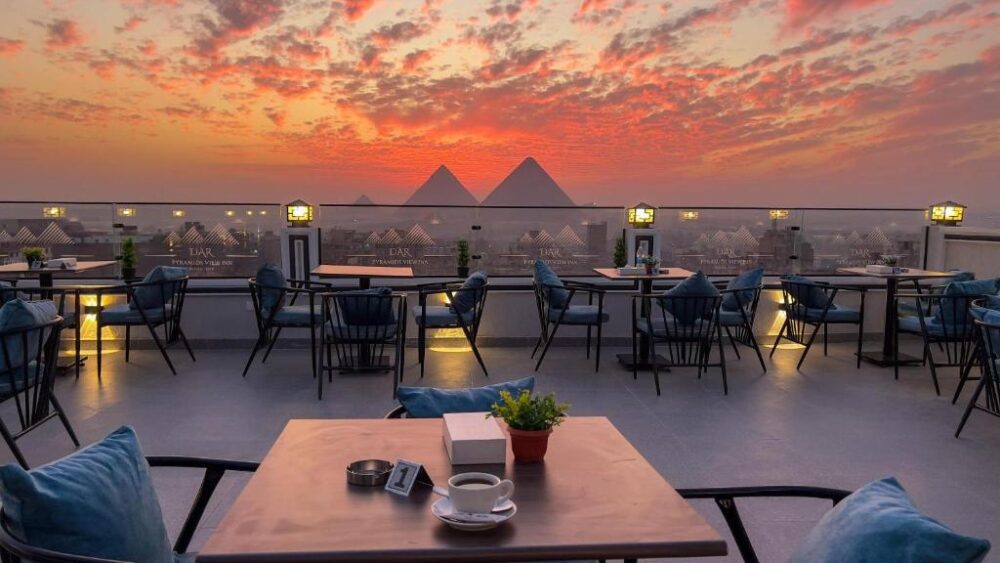
Several new rooftop venues have opened in the immediate Giza area in the past two years — restaurants and cafes that are positioned specifically to offer pyramid views at sunset. This was nearly impossible to find at a quality level previously. Now you can combine a late afternoon pyramid visit with a sunset dinner that overlooks the plateau.
Ask your Cairo tour operator specifically about pyramid-view rooftop options when booking. The best ones book up. Don’t assume you can walk in.
The Sound and Light Show — Still Worth It, Actually
Yes it’s touristy. Yes the narration is slightly melodramatic. The Sound and Light Show at Giza is still one of the stranger, more memorable experiences Cairo offers. Sitting in the desert at night while the Sphinx gets bathed in colors and tells you its own story in a booming voice is objectively an experience. Do it at least once, preferably before you leave Egypt.
Islamic Cairo Tours: Why Sunday Morning Changes Everything
Here’s the local knowledge that tour operators rarely share upfront: Sunday morning is the single best time to visit Islamic Cairo. The reason is simple — the tourist crowds are thinner, the local market activity is calmer, and the morning light in the narrow streets of Khan el-Khalili and the surrounding lanes is genuinely beautiful.
Islamic Cairo is a UNESCO World Heritage area and one of the most intact medieval urban districts anywhere in the world. The density of mosques, madrasas, caravanserais, and historic buildings within a few square kilometers is staggering. The problem is that when it’s busy, it can feel chaotic to the point where you’re not actually seeing anything.
On a Sunday morning — ideally arriving around 8am — you can walk through al-Muizz Street before the vendors set up their stalls. The architecture reveals itself. The tilework. The carved stone. The wooden mashrabiya screens on upper floors. It’s a genuinely different experience from the midday rush.
Entry tickets for the key monuments on al-Muizz Street are bundled in some cases — there are combination tickets for the historic gates, mosques, and palaces along the street. Again, exact pricing changes regularly, so verify with your tour operator or at the entrance booths. Budget roughly 100–250 EGP per monument for foreigners, with the understanding that major sites like the Mosque of Sultan Hassan and the al-Rifa’i Mosque (which are across from each other near the Citadel) have their own separate ticketing.
The streets you want to prioritize: al-Muizz Street itself from the northern gate Bab el-Futuh to Bab Zuweila in the south. Darb al-Ahmar, the street that runs along the base of the Citadel walls, is quieter and equally atmospheric. And al-Azhar Street and the lanes around al-Azhar Mosque are worth exploring even if you can’t enter the mosque’s inner areas as a non-Muslim.
A guided Islamic Cairo tour of three to four hours on a Sunday morning is one of the best things you can do in Cairo. It changes the way you understand the whole city.
The Coptic Complex and the Upcoming Fustat Park

Old Cairo — Misr al-Qadima — is where the city actually began, and most people squeeze it into a two-hour stop when it deserves a full morning. The Coptic Orthodox churches here are among the oldest continuously used Christian sites in the world. The Hanging Church, built over the gatehouse of a Roman fortress, has been in use for over a thousand years. The ben Ezra Synagogue, recently restored, is one of the most historically significant Jewish sites in all of Africa.
The area is compact, walkable, and genuinely moving. The light inside the churches is different — incense, old wood, stone that has absorbed centuries. It’s not a performance for tourists. It’s a living religious neighborhood.
And directly adjacent to Old Cairo: the Fustat Archaeological Park is in the process of a major redevelopment that will eventually open it as a public urban green space layered over the ruins of Egypt’s first Islamic city — founded in 641 AD. As of now, parts of the site are already being opened in phases. This is going to be a genuinely significant addition to Cairo’s cultural map. If you’re visiting and the park has newly opened sections available, absolutely include it. Even in its current state, it’s an extraordinary piece of history.
Combine Old Cairo with a Nile lunch on a nearby floating restaurant and you have a full and satisfying day without once entering a tourist-trap souvenir shop.
Beyond Giza: Sakkara and Dahshur Are Not the Consolation Pyramids
People say ‘I’ve done the pyramids’ and mean Giza. But Giza is one pyramid complex. Egypt has over 130 pyramids, and two of the most interesting ones are less than an hour from central Cairo.
Sakkara: The First Pyramid and the Best Tombs
Sakkara is where the pyramid story actually begins. The Step Pyramid of Djoser, built around 2650 BC, is the world’s oldest large-scale stone building — it predates the Giza pyramids by about a century. The complex around it has been under ongoing excavation and restoration, and new discoveries continue to emerge from the site. Recent excavations have opened additional tombs and burial shafts to visitors that weren’t accessible a few years ago.
But the real reason to visit Sakkara over a second trip to Giza is the private tombs. The decorated tombs of the nobles at Sakkara — especially the tomb of Ti and the tomb of Mereruka — have painted and carved reliefs that are incredibly well preserved and show scenes of everyday life in ancient Egypt: farmers, fishermen, bakers, musicians. This is a completely different visual language from the royal imagery at Giza. It’s intimate and human in a way that makes the 4,500-year distance suddenly collapse.
Sakkara pairs well with Memphis — the ancient capital, now a small open-air museum with a colossal statue of Ramesses II lying on the ground like a fallen giant. Half a day covers both comfortably.
Dahshur: Two Pyramids and Basically Nobody Else
Dahshur is the hidden gem of Cairo pyramid tours and it’s almost criminal that more people don’t go. Two pyramids built by Pharaoh Sneferu — Khufu’s father — and almost always visited by a fraction of the crowds at Giza.
The Bent Pyramid is the one that stopped halfway through construction and changed angle — a visible record of ancient engineers figuring out structural limits in real time. You can see the exterior casing stones are largely intact, which gives you a sense of what all the Giza pyramids looked like before they were stripped. The Red Pyramid next to it is one of the few true smooth-sided pyramids you can actually enter — a long descent into the burial chamber with no crowds, no lines, just you and 4,600 years of silence.
Dahshur is usually combined with Sakkara on a single day tour and it’s one of the best day tours you can do out of Cairo. Any Cairo tour operator worth working with should be able to arrange this. If they look confused when you mention Dahshur, find a different operator.
How to Actually Choose a Cairo Tour Package (The Practical Bit)
Alright, let’s be direct about this. Cairo tour packages range from genuinely excellent to deeply mediocre, and the price difference between them is not always the giveaway you’d think it is. Here’s what to actually look for.
Does the itinerary include the GEM? Any Cairo sightseeing package built in the last two years that doesn’t include the Grand Egyptian Museum is operating on an outdated template. That’s a red flag.
Do they offer Islamic Cairo as a dedicated experience or as a thirty-minute add-on? Islamic Cairo deserves a minimum of three hours. If a tour is giving you an hour at Khan el-Khalili and calling it Islamic Cairo, that’s not Islamic Cairo — that’s shopping with a brief mosque detour.
Do they know Sakkara and Dahshur? Not just that they exist, but do they include them in day tour options? These sites reward people who have a guide who can actually talk about what makes them different from Giza.
Can they design a custom itinerary? The best travel agencies in Cairo will sit with you — literally or over email — and build something around your specific interests and schedule. Cookie-cutter packages are fine for some travelers. But if you want the Saturday flea market and the Nile walk and the Fustat park and Dahshur and a Sunday morning in Islamic Cairo — you want someone who can put those pieces together for you.
For travelers who want that kind of flexibility and local knowledge, Holiday Tours Cairo has been operating in Cairo long enough to know which experiences are genuinely worth the time and which ones are just ticking boxes.
Ask specifically about their guides. A Cairo tour is almost entirely defined by the quality of the person walking with you. A mediocre guide at the Great Pyramid will make the Great Pyramid boring. That’s an achievement. A great guide in a small tomb in Sakkara will make you feel like you’re in a different time. Ask about guide specializations, ask about their approach to pacing, ask what they would personally recommend for someone with your specific interests.
Quick Answers to the Questions Cairo Travelers Actually Ask
What is the best Cairo tour package for first-time visitors?
For a first visit, you want a package that covers the Giza pyramids and GEM on day one (full day), Islamic Cairo on day two morning with the Coptic Complex in the afternoon, and Sakkara with Dahshur on day three. That’s a solid three-day foundation that covers the non-negotiables without being a museum death march.
Is the Grand Egyptian Museum worth it?
Yes, completely. The GEM is one of the best museums in the world right now, not just in Egypt. The Tutankhamun collection alone is worth the trip. Budget at least three to four hours. Go with a guide if you can, because the scale of the place means you’ll spend a lot of time wandering without context if you go solo.
What is the best time to visit Islamic Cairo?
Sunday morning between 8am and 12pm. The light is good, the crowds are manageable, the atmosphere is calm. Friday afternoon is the absolute worst time — it’s when everyone else is there too.
Can you visit Sakkara and Dahshur in one day?
Yes, very comfortably. Leave Cairo by 8am, spend the morning at Sakkara (including Memphis if you want), drive to Dahshur after lunch for two to three hours, and be back in Cairo by late afternoon. Most Cairo tour operators can arrange this as a single day tour.
What is the Fustat Park in Cairo?
Fustat is the site of Cairo’s oldest predecessor city, founded in 641 AD by the Arab general Amr ibn al-As. The archaeological site is being converted into a major urban park with open excavations, greenery, and cultural programming. It sits adjacent to the Coptic Cairo neighborhood and is in phased development. Check current access when you arrive, as new sections keep opening.
Is Cairo safe for tourists walking alone?
In the areas covered in this guide — Zamalek, downtown, Maadi, Old Cairo — yes, walking is generally safe and manageable. Islamic Cairo is best navigated with a guide for the first visit simply because the layout is genuinely confusing. Use common sense, dress modestly near religious sites, and you’ll be fine.
What is the best travel agency for Cairo tours?
Look for agencies with guides who specialize in specific areas (Egyptology, Islamic history, Coptic heritage) rather than generalists who cover everything at surface level. Holiday Tours Egypt is a well-established option with local expertise across all these areas. Always verify guide credentials and read reviews before booking.
How much do Cairo tour packages cost?
It varies widely. A half-day private guided tour typically starts around 50–80 USD per person. A full-day tour including entrance fees runs 100–150 USD or more. Multi-day packages depend heavily on accommodation and whether private transportation is included. Avoid extremely cheap group tours if you want actual engagement with the sites rather than a crowded bus experience.
What are the best walks in Cairo?
The new Nile promenade in Zamalek for evenings, downtown Cairo on weekend mornings for architecture and atmosphere, the al-Muizz Street area on Sunday mornings for Islamic Cairo, Bab el-Wazir for renovated mosques, Maadi’s Road 9 area for food and cafes, and the Coptic Cairo lanes for history and quiet. All of these are walkable without a guide, though context helps for the historical areas.
Is the Saturday flea market in downtown Cairo worth going to?
Absolutely, and it’s free. Show up around 9–10am on a Saturday, bring cash, be prepared to negotiate, and don’t expect to find specific things — this is a browse-and-discover kind of market. You might find nothing or you might find something extraordinary. That’s the whole point.
Understanding Cairo
Cairo will give you exactly as much as you’re willing to dig for. The city has spent years building new experiences — the GEM, the Nile walk, the Fustat park, the renovated mosques, the rooftops — and most of it hasn’t made it into the standard tourist circuit yet. That’s your advantage.
The best Cairo tour package for you is the one that acknowledges that the city is a living, evolving place — not a fixed list of monuments to check off. Find a tour operator who knows the difference. Find a guide who genuinely loves the city. And build in enough unscheduled time to just walk around and see what you find.
That Saturday flea market? Nobody put it on a tour. You’ll stumble on it yourself, and it’ll probably be your favorite memory from the whole trip.